Showing posts with label belarus. Show all posts

Belarus: Early Voting Boosts Turnout Amid Calls to Boycott Elections

Global Voices Online
Saturday, September 22, 2012


More than 39,000 users have joined the Stop Luka [be, ru] VKontakte group, which is urging voters to boycott the Sep. 23 parliamentary election in Belarus (the "non-election," as The Economist's Eastern Approaches blog calls it):


[...] When we come to the polling station, we put our signatures and "vote." The only thing that matter here is the turnout, which legitimizes the regime, and our illusion that we are making "some sort of a choice." [...]

There's no point voting - your vote will be stolen. There's no one to vote for - only pro-regime bureaucrats and special services' proxies are running. There's no use coming to the polling station and thus complying with falsifications. Only the boycott. Only the refusal to cooperate with the regime. [...]

It's easy to steal the vote, but impossible to falsify the turnout. If Belarusians don't show up at the polling stations, it will be visible with the naked eye. And it will mean that the people oppose the tyrant. [...]

If you're boycotting the election, you're helping your country to make a step towards freedom. [...] It's up to you to choose whether to play the dictator's games or to refuse to help [President Aleksandr Lukashenko]. [...]


A banner calling to boycott the Sep. 23 "election" in Belarus, posted in the "Stop Luka" VKontakte community.

It appears, however, that there'll be no problems with the turnout.

Journalist Pavel Sheremet wrote [ru] on Facebook on Thursday, Sep. 20, that 3 percent of the voters had cast their votes on the first day of early voting.

User Aleh Pov pointed out [ru] in a comment to Sheremet that on the second day the turnout was already 7 percent:

[...] At this rate, we'll have 25 percent by Sep. 22.

User Irena Ławrowska posted this comment [be]:

Just returned from the hairdresser's... [Educated the ladies] there - and what do you think? Most of them aren't going [to vote]. Among those who are going [to the polling stations] are [...] the pensioners, because they've never skipped a vote, [those who couldn't care less], because "their boss asked them to," and, of course, the complete "blondes"!

On Friday, BelarusPartisan reported [ru] on Facebook that 12.5 percent of the votes have been cast in the first three days of the early voting.


Invitation to the parliamentary election in Belarus: "23 September 2012 - Elections of the members of the House of Representatives of the National Assembly of the Republic of Belarus - Everyone come to the election!" (Image in public domain.)

In another Facebook post, Sheremet shared [ru] BelarusPartisan's photo of a group of soldiers queueing for an organized early vote in Machulishchi [ru], a village near Minsk that houses a military base. Below are some of the readers' comments:

Lyudmila Saakyan:

The patience of Belarusians must end eventually.

Vadim Savransky:

I think Belarus will explode sooner or later. This cannot go on forever.

Marina Pavlova:

It can [go on forever].

Belarus: Views From the Ground

Global Voices Online
Saturday, June 23, 2012


In his June 20 text for The Jamestown Foundation's Eurasia Daily Monitor, Grigory Ioffe discussed the prevalence of Russocentric tendencies in the cultural, political and economic sectors in Belarus, and, on the other hand, the country's relative lack of isolation from the West, concluding, among other things, that "the cliché-ridden thinking [was] inadequate for understanding Belarus."

Below are some relevant statistics from Ioffe's article:

[...] According to Demoscope, a Russian demographic portal, about half of all Belarusians have relatives in Russia and one-third of them have close friends there. Only 17.5 percent of Belarusians have never been to Russia, while 51.6 percent have been to Russia multiple times [...].

[...]

According to the European Commission for Home Affairs, in 2011, for the second year in a row, Belarus was the world leader in terms of the number of acquired Schengen visas per 1,000 residents. In 2011, Belarusian citizens received 580,000 C-type (qualifying for up to 90 days of stay) Schengen visas (a significant number for a country with a population of less than 10 million) – 150,000 more than in 2010. For comparison, citizens of China (with a population of 1.3 billion) received about one million Schengen visas, whereas citizens of Turkey, a country seven times more populous than Belarus, received only 592,000 visas. With 61 Schengen visas per 1,000 residents, Belarus is far ahead of Russia (36 visas), Ukraine (24 visas) and Georgia (13 visas). Even in absolute, not relative, terms Belarus is the world’s fifth highest recipient of Schengen visas. This is despite the fact that Belarusians pay 60 euros for their Schengen visa – much more than citizens of other post-Soviet countries who pay only 35 euros [...]. [...]

And here is a selection of some "views from the ground" - recent posts by Belarusian bloggers about the situation in the country and what it is like for ordinary people to live there.

Minsk-based LJ user vandrauniczy loves to travel [ru] and is upset [ru] that there are too many negative stereotypes about his country, blaming it not only on the current regime, but also on some of the exiled representatives of the Belarusian opposition:

[...] 9.5 million people live in the country, and they want to have world stars [come to Belarus], and they want to have all sorts of world brands enter their market, instead of having to travel abroad for that, but these fighters [EU-based members of the opposition] do not understand this, as they have all of it right in front of them in the foreign lands. I totally cannot grasp how such methods would affect the political problem. I do understand, for example, calls not to do business with companies close to [President Alyaksandr Lukashenka], not to invest money in these companies. But it appears as if the goal is to isolate the country as much as possible - that is, if there's no way to get rid of the dictator, let's do everything so that those who do have an opportunity leave for good, and only [the most unworthy ones] remain. Take those calls to refuse to hold concerts [in Belarus]: the thinking is that the people would be deprived of the much-needed entertainment, they'd hate [Lukashenka] for that and would learn that such entertainment is only possible after the [political] changes have occurred. Personally, I feel nothing but rejection and aggression towards these "bright minds" because of their stance.

[...]

I am categorically against isolation of any country in general, and especially of my native country. For example, the lack of tourists [in Belarus] has nothing to do with the lack of places of interest - it is due to the horrible image of the country that has been created in the long 18 years of [Lukashenka's] rule (the lack of investments has the same explanation, but ordinary citizens do not feel the consequences as much). It is actually really clean here and even when I'm walking around the city at 2 AM, I've never faced danger from packs of stray dogs or groups of thugs. There are problems with service. But the main stereotype [that Belarus is a place] "where they can throw us in jail just because we are foreigners" has no justification whatsoever. [...]

LJ user rastaev writes [ru] about those who consider emigration to the West a better option than staying in Belarus - if not for themselves, then definitely for their children:

My old friend - once a successful businessman, who [had problems with the authorities], had his business taken away from him unlawfully, and even though he managed to keep his honor, [the ordeal drained him psychologically] [...]. He is not participating in any [political activities], isn't going to rallies, isn't trying to prove more than he has proved already.

He's just raising his daughter. A beautiful and bright daughter.

He's hiring foreign language tutors for her, music and drawing teachers, is trying to teach her the basics of programming. In general, he's doing everything so that she could enter adult life as a diversely educated person.

What's so special about it? Many parents do the same. But there's one important little aspect in his educational approach: the words "motherland" and "patriotism" are banned in my friend's house.

My friend is preparing his daughter for a life outside this country. And the daughter knows about it. And she knows why. And since she's a smart kid, she doesn't object.

"In this country, my life has been [wasted], and I don't want my daughter to follow in my steps," my friend tells me, and I can't argue with him.

[...]

It is sickening here. Unbearably sickening. No matter where you look. [...]

It's sickening to watch how boorishness, ignorance and impunity flourish, how the basic human rights are violated, how innocent people are being thrown in jail and how this gets sealed with the "just" court decisions.

[...]

Sickening to understand that it's impossible to change anything, because a person capable of thinking and sympathizing is deprived of a possibility to influence anything here.

When people wish to express pride for a place they live in, they say "in our country." When they want to emphasize their contempt, they say "in this country." [...]

The country isn't to blame, of course. Like the majority of us, it is a victim, too.

[...]

It is not scary to find oneself in a foreign land in the age of fast internet and comfortable airplanes. What's scary is when your native land turns foreign. When the only way to stay in your motherland is to carry it inside you underneath the distant skies of the strange shores.

LJ user head-of-babulka writes [ru] about those who remain in Belarus, coping with reality by ignoring its ugly aspects, tolerating the regime, refusing to get involved in politics, seemingly unaware that eventually they'll have to face the consequences of the long-term destructive actions of the current regime:

[...] But collision with reality will take place sooner or later. The only question is what conclusions a person who'll hit his forehead on it would draw. Will he be able to see his own guilt behind the dirty floors of small-town hospitals, where severely ill people lie in the hallways, post-stroke patients for whom there's not enough space in hospital rooms, and the medical staff, detached and uncaring? When he sends his kids to schools that used to give excellent knowledge just 15 years ago, will he be able to see how rotten they've become, the degradation and opportunism that have replaced the joy and initiative of the teacher's profession? What will he decide when he notices that [schools are] fully staffed with people who do not give a crap about children's education and, naturally, about their future? Will he be able to notice the link between what he sees and the 20 years of the lack of alternative and the complete annihilation of competition of ideas?

Common sense tells me that no, he won't be able to see it. But I would very much want to believe that this person isn't blind, that he is just living with his eyes shut.

In a comment [be] to this post, LJ user genevien explained his decision not to leave Belarus:

[...] Because for me to stay is also one of the methods to influence the situation, to not detach myself from it.

On his blog, he posted [be] a user-created video for the song "Hray" ("Play") by the Belarusian band Lyapis Trubetskoy, which is banned in Belarus. The video includes footage of the post-election clashes that took place in Minsk in December 2010, and the blogger posted it on the first anniversary of these events because he considers this song "an anthem for the past year [2010] and this year [2011]." (A similar video for this song, also using the December 2010 footage, was created [be] by LJ user manivid, who has also translated the song's lyrics into English.)

Ukraine: Memories and Photos of Chernobyl in August 1986

Global Voices Online
Thursday, April 28, 2011


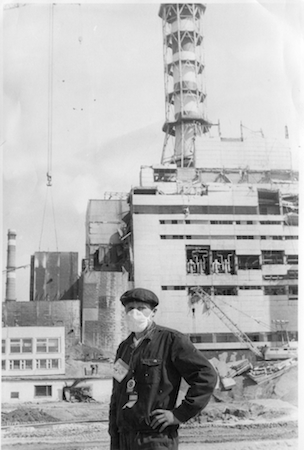
Moscow-based LJ user av-strannik (Aleksandr Strannik) arrived at the Chernobyl Nuclear Power Plant in mid-August of 1986, some four months after the April 26 blast at Reactor #4, to assist in the clean-up effort as a ventilation engineer. By that time, "all the most dangerous work had been done by the [liquidators]," he wrote [ru] on his blog on April 19, 2011. In a follow-up post [ru], written on April 26, Strannik explained how he had become one of the Chernobyl catastrophe "liquidators" himself:


[...] I asked to be sent to [the Chernobyl Nuclear Power Plant] right away, as soon as I learned about the accident's scale. What are you going to do there, my boss asked me. I could clear the debris away with a bulldozer, I had done this type of work as a student. They'll manage without you. Then, in August, when the numbers of those willing to go on a work-related trip [to Chernobyl] diminished, they remembered those who had wanted to come from the very start. [...]


Chernobyl Nuclear Power Plant, August 1986. Photo by Aleksandr Strannik (LJ user av_strannik)

Strannik, who was 30 back then, was an amateur photographer, and "a couple of snapshots" that he took in Chernobyl in 1986 "even won some prize at some exhibition" later. Recently, he has scanned 17 of these photos - including those that he took just "for himself" ("as they'd say now, for [Odnoklassniki.ru, a social network popular in the former Soviet Union]") - and shared them on his blog - "for the [25th] anniversary, so to say."

Replying to one reader, Strannik wrote that he had been using a Zorki 4 camera, as well as "an old [Zenit]"; he also wrote that he had printed "a few hundred pictures" while in Chernobyl ("until there was no more paper left" to print on) - "and all our guys were going back home with the photos )."

Below are some of Strannik's recollections from his time in Chernobyl 25 years ago, translated from Russian; to see his photos, please visit the original post [ru].

About the drivers of concrete mixer trucks, which can be seen on the second photo, right next to the damaged reactor:


These drivers are heroes - either due to their carelessness, or due to ignorance. They were paid five times their [usual] salaries and they had been promised [Zhiguli cars off the waiting list] - but I'm afraid very few of them [lived long enough] to actually get those Zhigulis - it was [2 roentgen per hour] where the photographer stood, and as for where the drivers were, at the base of the [Sarcophagus], I don't know, I think it was no less than [20 roentgen per hour], i.e., it was safe to work there for one hour, which was unreal in those conditions. [...] A paradox of the Soviet times - to pay for a Zhiguli with one's own life. [...]


On "curiosity":


[...] I wanted to take a photo of the reactor from above. Went to the airfield, no security guards, [helicopters] are all there, and a wagon at the field's edge. Next to the wagon [stood] the helicopter pilots. Who are you? A photographer, would like to photograph the reactor from above. Go to that yellow [helicopter], they fly to the object more often. I come up to them, ask to take me with them. Are you out of your mind, they are forcing us to go there and you are getting yourself into it voluntarily, better take a photo of us, we don't have a single picture from the whole trip. I took a picture of the crew. When will the photos be ready? I'll make them tonight. Ok, come tomorrow, we'll give you a ride over the reactor. I returned [not the next day, but] a day later, couldn't make it earlier. Where's the yellow [helicopter]? What do you need it for? - they ask me suspiciously. I've brought photos for the guys, they'd promised to take me on a flight over the reactor. The guys crashed yesterday ( How? They were preparing to land, there was a gust of wind, they fell on the tail from 50 meters or so. Are they alive? Yes! They are at the [hospital], the [helicopter] was covered with lead sheets [to protect the crew from radiation exposure], made it difficult to operate it, they got off easy. Right, and they had invited me to this very flight, and I couldn't make it, was on duty. Lucky you. Please pass the photos to the guys. My interest in flying was gone. [...]


For the 25th anniversary of the Chernobyl catastrophe, Strannik, along with other Moscow-based "liquidators," has received these presents from the regional organization "Soyuz Chernobyl" (pictured on the last two color photos in the April 19 post): a thermos flask, a bottle of vodka ("a radiation medicine" written on it, among other things) and a framed Russian Orthodox Christian prayer.

Strannik's photo story has generated four pages of comments, with many readers expressing gratitude to the author and all the other Chernobyl "liquidators." LJ user oksana_slk was among those who also thanked Strannik for "preserving the history of this tradegy." He replied:


As an eyewitness, I can only state that this tragedy could have been survived with fewer human and material losses - if the management had been adequate (

Belarus: Presidential Election Day Ends in Protests and Crackdown

Global Voices Online
Sunday, December 19, 2010


December 19, the 2010 presidential election day in Belarus, ended in mass protests, arrests and violent clashes with the riot police in Minsk, the capital of Belarus.

Aleksandr Lukashenko, who has served as the President of Belarus since July 1994, ran against nine opposition candidates, some of whom are now reported to have been attacked or arrested - or both. Thousands of people gathered in the center of Minsk to protest electoral fraud after the polls closed (some photos and video are here), but as they tried to storm the government headquarters and the central election commission building, they were soon dispersed by riot police. Dozens of protesters and a number of journalists, including a reporter and a photographer for the New York Times, were injured.

Problems with the internet and limited access to social media and opposition websites in Minsk were being reported throughout the day, too (see earlier GV updates by Alexey Sidorenko - here, here, and here). Evgeny Morozov (@evgenymorozov), who is currently in Belarus, tweeted that he couldn't "access anything using https." In another tweet, posted Sunday afternoon, he wrote:

I also hear that since access to Gmail in Belarus is blocked, opposition sites can't use their mailing lists

Still, citizen media reports were being filed before, during and after the events in the center of Minsk.

On Dec. 18, Dmitry Rastaev (LJ user rastaev) commented (RUS) on the supposedly voluntary "early voting" - in which "23% of the 7 million registered electors" had cast their votes, and which is often considered "an instrument of vote-rigging for authorities":

Talked with my [student] daughter [via ICQ] today, she said this: "In the dormitory, they are coming into the rooms with the Eviction Act and write down [the names of] all those who didn't vote early on this piece of paper, putting "for [creating insanitary conditions]" as the reason."

And in the meantime, [Lukashenko] and his clique are barking on the TV about "unacceptability of forcing [people] to vote early."

[...]

If on the 19th, this [bastardly] regime does not collapse, I don't even know... [...] To tolerate this filth and these jerks for five more years - it is physically impossible by now!!!

LJ user adelka posted this report (BEL) after she returned from the rally:

We are home, alive and in one piece.

[...]

My husband, his brother and I carried out a woman covered in blood, [she had a head injury], there were two ambulances behind the government building [...] - they were filled with people (6-8 injured people in each one), mainly women with head injuries [...]. They were breaking people into groups and chasing them into "pockets" - and there, they were throwing them on the ground and beating them. They were even beating underage girls - [...] beating them with their feet and sticks, and happily laughing as they did it. [...]

The feeling is that there's a junta and fascism in the country.

[...]

I'll tell you honestly, I was scared. But I'm happy that the regime fears me and I'm proud of those who was there [at the rally]. Forgive me, but it's hard [not to sound pompous] after what I've seen with my own eyes. [...]

LJ user aneta-spb, a St. Petersburg-based journalist who came to Minsk to cover the election, posted these updates (RUS) from the rally:

October Square, Minsk.

A lot of people on October Square, I'm in the crowd [...], and can't count [how many] because of this. [...] Most people are young, but there are enough mature people, and the elderly. People are calling their friends on the phone, inviting them to the square: "What are you afraid of, come over here, we can't live like this any longer."

Riot police are pushing the people from the square [...]

Fights with agents provocateurs had been provoked. Lots of riot police, a whole army [of them] - they are coming to the square from all directions, trying to push people out, but the people aren't leaving. [...]

First, the people occupied the center of Minsk, then, riot police and the army.

[...] But it was powerful. Very powerful. [...] Of course, it was a bit scary, too. [...] The Belarusians [did great, truly great]. I'm proud. And the main thing is that the people came out not for the leaders. Which proves one more time that the leaders are [not of primary importance].

LJ user dabrahost wrote this (RUS):

I totally agree with Natalya Radina via EURORADIO: "Lukashenko has declared a war on his own people."

From this, logically => his whole vertical - is in a state of war with the people => every official and cop deserves a Hague tribunal. EVERY OFFICIAL AND COP! Sooner or later, this will happen.

On Twitter, the #electby and #ploscha hashtags were and are being used on reports on the situation.

@euroradio (BEL):

Witnesses of the beating on the square: they were beating one guy, he fell, the riot police officer came back and [beat him some more, until he lost consciousness]. [...]

@Feveray (RUS):

[...] The snow on the square in front of the government headquarters is red.

@jkirchick (ENG):

For the record: Belarusian spetznatz are jackbooted thugs [...]


@chudentsov
(RUS):

To stand between two columns of riot police as they are closing in on you, when you have only your smartphone as a weapon - isn't nice. My legs saved me. [...]

@lucysd (RUS):

For the first time I've seen how riot police are beating people with sticks... During our [Ukrainian] orange revolution [of 2004] everything was like in a kids' fairy tale compared to #electby

Ukraine: Flu Stats, Panic, Gauze Masks (and Some Lingerie)

Global Voices Online
Tuesday, November 10, 2009


GV's H1N1 Outbreak 2009 special coverage page is here. Last week's coverage of the flu epidemics in Ukraine: Oct. 31; Nov. 1; Nov. 2; Nov. 3; Nov. 4; Nov. 6; Nov. 7.

According to Ukraine's Health Ministry (UKR), 1,031,597 people in Ukraine have fallen ill with "flu, acute respiratory illness and their complications (pneumonia, etc.)" between Oct. 29 and Nov. 9 - and 174 of them have died.

According to World Health Organization, whose experts are currently working in Ukraine, "public health measures recommended by the Ministry of Health of Ukraine across the entire country include: social distancing (school closures and cancellation of mass gatherings); enhancement of surveillance activities; increased respiratory hygiene; and continuation of the vaccination campaign against seasonal influenza targeting at risk groups."

In the Ukrainian blogosphere, much of the discussion of the current medical emergency focuses on whether there are enough reasons to panic or not.

Maryna Reshetnyak, GV's Russian Language Health Editor, has just translated excerpts from one of the most widely read and discussed Ukrainian blog posts of the past week, written by Kharkiv-based pediatrician and author Yevgeny Komarovsky on Nov. 2. In his post (RUS), according to Maryna, Dr. Komarovsky has provided, among other things, "a balanced professional analysis of the flu epidemic" - and "shared his opinion concerning the hysteria surrounding the flu, the irresponsible appeals of politicians and the errors of public health officials." Here is one of Dr. Komarovsky's assessments:

[...] If we double the number of people sick with the swine flu (since no more than half the people with the flu go to a doctor) and compare it with other death rates, we will see that the death rate is even lower than with the regular flu. Pneumonia is the most common cause of death in every country at any time. Pneumonia often accompanies many other diseases and traumas. If each case of pneumonia was reported by the media, nothing good will happen. [...]


On Oct. 29, the day the epidemic was announced by Ukraine's Health Ministry, Lviv-based LJ user orestk carried out similar calculations (UKR) in an attempt to counter the panic:

In 2007, 205 adults died of pneumonia in Lviv region, in 2008 - 182 people. In the first nine months of 2009 - 105 people. There are 92 days in the last three months of the year. For the number of deaths to be no lower than last year, 182-105=77 more people have to die. That is, six people every week. And here we are having a panic attack because of four deaths (of adults, and there is one more - an 11-year-old girl) in the past week. Perhaps it's time to stop panicking? [...]


Two weeks later, Lviv region has 74 flu/acute respiratory illness/pneumonia-related deaths, which makes it the hardest-hit region of Ukraine so far.

On Nov. 5, Natalia Zhuravlova announced (UKR) the launch of an interactive map of flu dynamics in Ukraine, as well as a number of other related widgets, on the blog of the Ukrainian branch of the Russian web portal Yandex. Here is an excerpt from her introductory post:

Because of the epidemic, various scary rumors have been spreading rapidly in Ukraine - that we are having atypical pneumonia, or that we are having lung plague, or that there are more lethal cases due to swine flu than due to regular flu. The data on the dynamics of the disease often varies [significantly].

We at Yandex choose to look at things with calm. Yes, of course, we do not want to fall ill ourselves and are worry a lot about our dear ones. But we get flu epidemics every year, and each time we are told that there hasn't been a more horrible strain, but we are still alive and healthy (knock on wood). The most important thing is that actually the numbers of those sick with flu and acute respiratory infection aren't really high, they haven't reached last year's level yet. Unfortunately, people were dying from these diseases in the previous years, too, only no one was making the statistics public. So we should not panic. And, moreover, we should not trust the unconfirmed data.

So that our users could follow the official statistics of the spread of the disease and knew where to go to for consultation and help, we've developed several useful devices.

[...]

With the help of the map and the widgets, you'll see when the epidemic begins to subside. We hope that this will happen as soon as possible.

Stay healthy! And if you're feeling sick, call the doctor. And everything will be okay.


In a post about the flu info service offered by Yandex (UKR), Ukrainian Watcher - a blog covering "social networks, blogs and internet business" - also mentions Google.org's Flu Trends portal, which "uses aggregated Google search data to estimate flu activity." According to this resource, "flu activity" is currently assessed as "high" in Ukraine, Hungary and Poland, and as "intense" in Russia and Bulgaria.

While Belarus is not being monitored by Google.org's Flu Trends, here is what LJ user budimir wrote (RUS) on Nov. 3 about the situation there in a comments thread on a post by Kyiv-based LJ user kermanich:

[Here] they are using good old methods in their attempts to fight [the flu outbreak] - by hushing it up. They are not allowing any information whatsoever, even the most necessary.

And the panic is raging here already. Maybe even more than in Ukraine.

[...]

EVERYTHING that is even distantly related to the treatment of flu has been swept away from the pharmacies.

And yes, Minsk is wearing masks. No one is explaining to Minsk residents, however, that it is not necessary to wear masks outdoors.

[...]

In my work-related [RSS feed] that I got myself when I started doing reviews of the Belarusian blogosphere, nearly every second post is about swine flu.

There are also plenty of reports from friends and friends' friends, who are saying that "people are burning down like candles."

And there is some first-hand info - from hospitals. [The situation is grave] there, as far as I understand.

[...]

They aren't blogging about Ukraine here, are focused on local matters instead. [...]

But the government, it seems to me, is trying to portray Ukraine as the source of the infection - the first officially confirmed swine flu death of a Belarusian citizen turned out to have its origin [in Ukraine].

But this is a lie - there have been more deaths. Not from flu, of course - because they don't die of it, but of its complications - pneumonia, etc.

[...]


Here's how blogger Ivanko of Fructus temporum described the situation in the Ukrainian city of Kramatorsk (pop. 173,700; Donetsk region, where, as of Nov. 8, 48,263 people have been officially confirmed to have flu) in this Oct. 31 entry (UKR):

[...] First of all, lines in pharmacies. Not too long, some ten people on the average, but considering that we have a pharmacy every 20 meters, and sometimes pharmacy kiosks stand right next to each other, it was hard not to notice such a sharp increase in demand.

After my question, "What's happened?", people looked at me as if I... well, they looked at me unkindly.

After I learned the reason of the anxiety, I decided to buy Amizonum and Oxoline ointment [anti-viral drugs popular in Ukraine], because I didn't remember if we had them at home.

But I was too late. Amizonum had been sold out the day before, they've run out of gauze masks today, and bandages were almost gone, too. The pharmacist was dispensing her expert opinion on how to make two gauze masks out of one bandage.

I stopped by at a few more pharmacies - same thing everywhere.

[...]

Today, people were even lining up to buy medicinal herbs from an elderly lady [at the local market].

I don't know, maybe things are really that bad?

Then again, my neighbor still has a sack of overpriced salt that she bought during the latest salt anxiety. [At some point, there were false rumors in Ukraine that salt would disappear from the stores, which urged many people to store up on it in advance.]


And here is what LJ user e_grishkovets (Russian writer Evgeny Grishkovets) wrote on Nov. 5 about Kyiv, Ukraine's capital, where his shows were canceled due to the flu situation:

[...] In general, I can't recall Kyiv ever being in such a gloomy, suppressed and exhausted state. Though, of course, it would have been hard for me to perceive the city differently, considering the problems that have occurred.

[...] Theaters are closed. Ministry of culture has made this decision. But events scheduled to take place in sports facilities have not been canceled... The concert of Todes dance group at some palace of sports hasn't been canceled, a football game took place at a huge stadium yesterday, and today there is Aleksandr Rozenbaum's concert [...], at the Ukraina Palace (4,000 seats). [...] If someone could explain to me why these events are taking place while the theaters are closed... Where is the logic here, where is the truly thoughtful and well-justified fight against the epidemic?... [...]

[...]

On my way to the airport, the driver said that for the fourth day in a row there were no traffic jams in Kyiv, and there are a lot fewer cars and people in the streets. "Everyone looks kind of beaten," the driver said and smiled bitterly. [...]


On a lighter note, Ukrainian women's organization Femen held an "anti-stress" event at Kyiv's Independence Square on Nov. 9: to cheer Kyiv residents up, a group of activists put on self-made gauze lingerie and masks. LJ user drugoi (RUS) has posted three photos from the event, and there are six more photos at Femen's LJ blog (RUS). (Natalia Antonova's Sept. 11 interview with Femen's leader Anna Gutsol is here.)

While the undressing part of Femen's prank may or may not have been an allusion to the Nov. 2 protest against Ukraine's anti-pornography law (WARNING: graphic content), carried out by the Voina radical art group, the masks do seem to be turning into a fashion item in Ukraine: here, for example, is a selection of user-designed masks on sale at one of the Ukrainian online shops. And here's a link to LJ user ellustrator's gauze mask cartoon, which may or may not allude to this photo of PM Yulia Tymoshenko wearing a mask.

Belarus: The Blast, the Arrests, and Bloggers' Solidarity

Global Voices Online
Friday, July 11th, 2008


A week ago, a homemade bomb packed with bolts and screws tore through a crowd of thousands of people who had gathered for the Independence Day all-night concert near the World War II monument in central Minsk. The blast occurred around 12:30 a.m on July 4; some 54 people were wounded; Belarusian president Aleksandr Lukashenko happened to be nearby when the bomb went off, but was not hurt.

Following the bombing, police interrogated a number of Belarusian opposition members and human rights activists and searched their homes and offices. On July 9, four people were detained: Sergei Chislov, Igor Korsak, Viktor Leshchinsky and Miroslav Lozovsky, all members of the White Legion, the youth wing of the Belarusian Union of Military Personnel, banned in 1996.

Andrei Khrapavitsky of the recently re-launched Belarusan American Blog has written (ENG) about the blast and the subsequent arrests - as well as about the Belarusian bloggers' response:

[...] I guess there’s hardly a blogger in Belarus who hasn’t commented on the bomb blast. People are guessing what happened and what consequences it would have. There are lots of different versions, but I doubt there is much sense to recapitulate them here. One is for sure. This is the first major terror act in Belarus. Even if the regime itself is not involved (and most probably, it isn’t as many prominent analysts, like Silitski and Feduta, think), there’s a damn good pretense to use this bomb blast for intimidation of the opposition. The blast is especially handy for this matter, as it happened a few days after the parliamentary race had officially started in Belarus.


LJ user kabierac posted Martin Niemöller's poem "First they came…" on his blog and called Belarusian fellow-bloggers to use the emblem of the White Legion as their userpic image, to express solidarity with the four individuals detained in connection with July 4 blast. His post (BEL, RUS) has made it into the Top 30 of the Yandex Blogs portal.


Many Belarusian bloggers have supported the initiative. LJ user coipish is one of them; according to some reports (BEL), he has also been detained by the police. He wrote this (BEL, RUS):

What you see on my userpic now is the emblem of what used to be the White Legion, whose former members are now being blamed for the recent blast. I join the initiative to support them by at least changing my userpic. I really sympathize with all the victims of the terrorist act, but, unfortunately, the real perpetrators are not likely to be ever held responsible for it :((


LJ user z_hunter chose to use an alternative userpic image - with the same symbol but a different color scheme:


Here is why (a discussion in the comments section on LJ user coipish's post):

z_hunter:

A good emblem, but the colors are bad. Not our colors - black and red. I like the white-red-white variation better.

kostas14:

Traditional for the Belarusian culture and art. [...]

z_hunter:

That's right. But red flag is also associated with some not very good periods in the history of the USSR and Germany. And all this had a very destructive and sad effect on our Belarus.


As for the reactions of the relatively apolitical Minsk residents, Kartina Mira ("Picture of the World") blog, run by a Belarus-based Russian citizen, has this sketch (RUS), featuring a conversation overheard at one of the city's hairdressing salons:

[...]

- Oh, have you heard about the blast? A real terrorist act...
- Yes. Chechnya is way over there, and we are here. They are totally getting out of control.


That is, these events are so unnatural for Belarus that ordinary people come up with only one direct association for the blast: "terrorist act - Chechnya."

The realities of the country I live in. Quiet, peaceful, nice, stable. Sometimes even boring. But it's so much better than what the neighbors have.

Russia: Farewell to "Khrushchevki"

Global Voices Online
Saturday, July 5, 2008


Earlier this week, LJ user drugoi, one of the most popular and prolific Russian bloggers, posted 17 photos from a Moscow neighborhood of Khrushchev-era apartment blocks, commonly known as khrushchevki, pyatietazhki, or khrushchoby. The neighborhood is about to disappear, to make room for more up-to-date residential high-rises.

Here's some of the text that accompanies drugoi's photo report (RUS), which has generated 331 comments:

Khrushchevki of the early 1960s are being demolished in south-western Moscow. Five-story buildings, with no balconies, with tiny kitchens, [box-like toilet-and-bathroom spaces], thin walls separating the apartments, allowing residents to hear everything that's going on in their neighbors' places - their time is up. Whole blocks of pyatietazhki [five-story buildings] have been deserted by their former owners and are left face to face with powerful machinery that's methodically taking down one house after another. When excavators and bulldozers [are done with their job], nothing but a flat, empty site remains where people still lived quite recently. My contemporaries were born and grew up in these pyatietazhki, they had their children there, and these children have had the time to produce grandchildren for [their parents]. Several generations have spent their lives in khrushchoba-houses [khrushchoba derives from trushchoba, a slum, and can be loosely translated as "Khrushchev slums"]. With their help, Muscovites were rescued from factory barracks and the horrible Soviet kommunalki [communal apartments], they provided young families with their first housing and gave old people peace and hot water in their own, albeit small, bathroom. All in all, thank you, pyatietazhki.

[...]

Resettling residents of such pyatietazhki is quite an ordeal. In the years they've spent here, they've managed to assemble numerous relatives around them, close and not so, everything is intertwined in a monstrous kind of way, every family has its own history of relationships, while the number of apartments provided by the city authorities for free isn't endless. Commissions dealing with the cases of the "resettlers" constantly run into problems: some don't like the new housing, others try to get themselves bigger apartments, try to move away from their children, grandparents, ex-wives and ex-husbands with whom they share the same living space.

[...]

Andrei is the last resident of this pyatietazhka. He's been in a legal battle with the local authorities for a year now. According to him, the situation is crazy: for the past five years, he's been sharing a small two-room apartment with his ex-wife, her new husband and their five dogs. He was asking to be resettled into two rooms, at least, in communal apartments, in different locations. But the resettlement commission is offering the former spouses one two-room apartment in a new building. City court has reinforced the commission's decision. Gas has already been turned off in the [old] building, but there's still water and electricity. No one knows what to do next.

Andrei says that nearly everyone in their building had problems with resettlement. On the one hand, it's understandable that people would like to solve the most difficult of all issues - housing - in one blow, but on the other hand, the state is basically giving them living space worth hundreds of thousands dollars for free, so the battles that are raging are indeed deadly.

[...]

[photo of a woman standing by the half-demolished building, talking to another one inside the building]

- Sveta, have you by any chance seen my old sneakers somewhere around here?

[...]

They aren't resettling people from pyatietazhki to [remote areas] anymore, but are giving them apartments right here, two blocks away from their old houses.

[...]

[last photo, of a newly-built high-rise]

In this building, people from khrushchevki are starting their new lives.


Here are some of the responses to drugoi's photo report; a few are from bloggers living in other former Soviet states - Belarus, Ukraine, Lithuania:

danatjan:

Old Soviet wallpaper is the most poignant thing about the pictures of the houses being demolished.

***

el_finik:

Strange that khrushchevki in Minsk [Belarus] looked totally different - with balconies, etc. - and no one is tearing them down :)

cheremis:

A different series. In Moscow, there are pyatietazhki that aren't up for demolition - normally, they are made of bricks and have balconies. The ones in the photos were intended to be used for 40 years, and [Moscow mayor Yuri Luzhkov] is, in a way, fulfilling the plans of the Soviet government ))

***

zlena:

It's even sad somehow... I was also born and grew up in a similar khrushchevka. It's my home. Though my khrushchevka is in Kyiv, and it's probably gonna be there for a long time still.

***

4lynch:

Some photos are as if they were taken in Chernobyl... Beautiful!

***

katerinishe:

Would be great to leave one building intact and create a museum of interior and everyday life in it. To be able, later, to recognize things that surrounded you as a child or stuff that your grandmother had.

***

nito_os:

I grew up in a khrushchevka, too, and I live in it still. But here in Lithuania they aren't demolishing them, quite the opposite: they are repairing them and build an extra story on top, to pay less for repairs. Khrushchevki will survive us all!

Belarus: Freedom Day Protest

Global Voices Online
Sunday, March 30, 2008


On Tuesday, March 25, police broke up an opposition rally in Minsk, the capital of Belarus, beating protesters with truncheons and detaining dozens of people. According to media reports, thousands of protesters showed up for the annual Freedom Day rally, banned by the government, and attempted to gather at one of Minsk's central squares, which had been blocked off by the police. On Wednesday, the detained protesters - as well as several journalists - were sentenced to jail terms ranging from three to 15 days.

LJ users dranik80, ialeks, coipish posted very vivid photo reports from the March 25 rally - here, here, and here.

LJ user mmpbel, 30, posted a lengthy and detailed account (RUS) of his experiences at the rally and, later, inside a police bus:


[...] When we approached Victory Square, I finally saw the people who, just like me, intended to mark [Freedom Day]. [...] [They] stood on all sides of the intersection. Along the sidewalk, there were traffic cops. There were mainly young people there, 20-year-olds and younger. I saw several middle-aged people, and a few families. There were [white-red-white flags], and they were distributing white-red-white ribbons (I wasn't offered one). There were almost no flowers. I saw only one woman with a white-red-white bouquet. The mood was festive. I saw a small group of young people who walked out onto the road, one guy was waving a flag, encouraging people to follow him, but not many did and traffic cops managed to clear up the road very quickly. Soon, there was a solid cordon of traffic police along the road, and, a minute later, another one made up of riot cops. [...]

People started moving towards Victory Square, the march began. Those in the front row of the formation were carrying a banner (but I didn't see what was written on it). I could hear the usual slogans. (Too bad we're not singing songs. I'm not the [slogan-chanting] type, but I would've joined in a song.) [...]

Very close to the bridge, the formation halted. Must have been because of the police standing in their way. We stood for a few minutes. I saw [opposition leader Anatoly Lebedko] walk forward, to do something about it. After a while, those at the head of the formation began to turn around. At the same time or a bit earlier, a police bus drove towards the bridge. Then things began to move fast. I saw cops in helmets run. Young people with the banner began to reposition themselves quickly, in order to be at the head of the formation again. Someone was hurriedly hiding away a fishing rod with the flag. A guy who carried the banner turned around and called out a female name, but then someone screamed "Andrei!" and I saw a girl being grabbed and dragged to the bus. Quickly, people began to disperse. I've been in a stampede before, but it was the first time that cops were chasing me. Hesitantly, I also began to move faster, still not really believing this was actually happening. As I understood it, they were mainly seizing young people with flags. [...]

[...] I felt it was all over and decided to try reaching the monument to [Belarusian poet Yanka Kupala monument, [to lay flowers]. [...] I moved towards the bridge again. There was a police bus standing nearby, and from its window, a detained girl was making a Victory sign with her fingers. Young people stood next to the bus - possibly, friends of those who were detained.

[...] A few ordinary [not riot] cops stood at the park entrance. I asked one of them: "Is the park closed?" He said, "Yes." [...] As I walked down Yanka Kupala Street, I saw that the park's side entrance wasn't guarded by anyone and that the park itself was empty. A man and two women walked by: he was begging them to stop being scared and enter the park. [...] I came to the monument and put the flowers down. My flowers were the only ones on the snow, but underneath the snow there were many more white-red-white flowers. An elderly man [...] walked by. There was no one but us in the park. I stood a few seconds by the monument, trying to imagine "what He [Yanka Kupala] was thinking of the things that were taking place."

I decided to leave the park through the exit guarded by the police. [...] I had nothing on me that could make them suspicious. There was a bus I'd already seen there. [...] A cop came up to me [and told me to get out.] [...] Another cop came up to me and said: "What are you doing here?" I [exclaimed, in Belarusian]: "Why are you talking to me like that?" (normally, I speak Russian, alas). (I do look very young, but hate it when rude strangers address me [informally], especially the uniformed ones.) And here it began. The cop grabbed me by the jacket and dragged me to the bus, screaming something. [...] The road was slippery, I almost bumped into the bus. [...] They pushed me inside, hit me in the stomach, there were screams, and orders to show them what was inside my backpack. It was all being done just to scare me, without any system to it. The bus was small and narrow, there were about a dozen cops in it. Perhaps this explains why the blow to my stomach was weak. [...] A cop called me to the back of the bus, searched me there, but didn't look into my backpack. Told me to sit at the back seat. Then they forgot about me.

The cops were constantly chatting, joking, and appeared bored. Talked on the phones with their wives, explained to them that they were at an "event." [...] They were cursing constantly. [...] They were discussing the cars they'd bought.

After a while, there was some screaming, the door opened, and they pushed in a tall, skinny guy of about 30 years of age. There was intimidation again, [they ordered him to drop to the floor.] [...] They took him to the back of the bus and searched him. Found an asthma inhaler [...]. Ordered him to sit next to me. Two women were brought on the bus after him (it looked like they didn't push them in). One of them was the guy's mother, the other was her friend. They looked very refined [...]. The mother asked to let her son go, spoke of his and her own poor health (she had heart problems), was asking who was in charge. No one listened to her, the one in charge didn't respond. Someone said that they'd violated the law on mass events, entered the park that was closed for repairs, had [anti-government] flags with them, were calling to the violent overthrow of the [regime]. The mother was begging the cops, tried to argue with them, was asking to be allowed to step out for some fresh air, to call the relatives. They refused to let her do any of it. [...] We were ordered to switch off our phones.

[...]

Things were quieting down and the cops were getting bored.

A cop who looked like he was in charge came in and ordered the women and the guy to leave [...]. [...] They were not allowed to take their white-red-white umbrella with them.

I was left alone again. I felt like a Red Army soldier imprisoned by the fascists. Hatred and the feeling of complete helplessness. If they took me to the forest to shoot then, I wouldn't be very surprised. There was no sign of any legal rights whatsoever.

[...]

The bus began to move [...]. [Then it stopped.] [...] [I was told to get up and go.] I got up and went. [...] The cop in charge, standing by the door, called to me [...]. I came up to him. He hit me on the ear near he back of my head. I heard laughter coming from the bus. I turned away, the door closed, and the bus drove away. [...] I switched on my phone and called my wife. It was around 8:30 PM by then.

It did occur to me to file a complaint with the prosecutor's office, but I didn't consider the idea for too long.


LJ user annie-minsk, 21, described (RUS) what it feels like to be at a rally in Belarus:


You do not feel fear when you find yourself in the midst of everything - the police, people, flags.

No, you harden even more. Tears, fear and shaking hands are long forgotten, replaced with [...] a wicked smile and cold calmness of a convicted person. [...] You're no longer shy and stop [using the polite form of address]. [...] Your blood fills with adrenalin. Everyone is equal here, everyone [is your buddy] - welcome to hell!

When you look at the photos on the web the following morning, you feel it all again. As if you're back there. Back into this dirty, wet, nervous mess made up of people, cameras, fat riot cops with brass knuckles and unruffled traffic cops. And the groaning of the black-clad bastards [riot cops] - "Reh-eh, reh-eh" (this is how they scream when they are pushing people, in order to move in sync) - it doesn't horrify you anymore, not as much as it did then, the first time, in the cold March of 2006 [a GV translation from that time is here]. Then it seemed wild. Monstrous, inhuman. We hoped for the better, believed it was just a threat. They'd scare us and let go. And everyone would go home, and there'd be kitchen talk, and someone would write about it in LJ.

[...]

I've heard one and the same question so many times: "What are you trying to accomplish with your rallies?" My reply is, come, have a look, find it out. And don't bother me, because we won't understand each other anyway.


There are indeed quite a few observers out there who question the approach of the Belarusian opposition.

Mark Grigorian - LJ user markgrigorian, a London-based Armenian journalist and political analyst - wrote this (RUS) on his blog on March 26:


I've been following the events in Belarus for a long time.

And I see how year after year the same story gets repeated: the Belarusian opposition announces a march, demonstration or rally devoted to the date that's important for the country and for the Belarusian nation as a whole. The authorities order them to change the route or the date or the place of the event, moving it from the city's center to its outskirts.

The opposition disagrees, holds the march (rally, demonstration) where it wanted to hold it. Often, it ends in clashes with the police. [...] There are dozens of detained as a result (including journalists), there are short-term arrests, the noise about human rights violations and sympathetic articles in the Western press.

I understand that I risk eliciting extremely negative reactions from my Belarusian [friends]. But I do have to mention that the stubbornness with which the opposition keeps holding events of the same type, which end with in a more or less predictable way, makes one think of the lack of imagination.

Also: I don't know what the response to these actions is inside Belarus. Outside - yes, it is effective. The press keeps writing about it, European and American politicians draw conclusions. But inside the country? What changes in Belarus? Are there more opposition supporters? Or, the opposite, are there fewer of them? [...]

If there is a political component, one has to consider this: what are the political results inside the country? If they are negative, why hold the new [protest] actions?

[...]

And if dispersals, beatings and arrests are so easy to predict, then why push young guys and girls at the riot police cordons?

[...]


Here is one reader's comment on Grigorian's post:


pisalnik:

I think it's a mistake to think that it's the politicians who push the young people towards the riot police cordons. I wouldn't overestimate the impact that the adult politicians have on the mood in various oppositional youth groups. It's actually the young people who often criticize adult politicians for being too moderate and not radical enough. The theory of manageability of the unwise youth by adults (including those from abroad) offers, by the way, the most convenient explanation for such events, but this theory happens to be, more often than not, an unacceptable simplification and cannot serve as a basis for the conclusions that you've arrived at. Belarusian opposition is far from being monolithic, and that's why we shouldn't presume that it can coordinate its actions. That is - what we observe in Belarus isn't the issue of the lack of creativity and imagination, but the problem of discord within the opposition and the "fathers and sons" conflict.

As for the political consequences of such seemingly pointless actions, sometimes one has to wait for a very long time. But there'll be no results if resistance stops.

[...]

I find it hard to imagine how it is possible to diversify the situation, when the regime always has an obvious advantage in its confrontation with the protesters, mainly in the form of the disciplined and obedient repressive machine. [...]

In the end, it's all about the impossibility to coordinate the activities of the conflicting [...] opposition groups - and the regime makes use of it more or less successfully. Coordinated activities and readiness to express solidarity within the oppositional camp - that's the main problem. How to solve it? I don't know.


As for the impact of the opposition's protests within Belarus, some bloggers think there isn't too much of it.

LJ user lidial reposted an inquiry (RUS) from live_report, a joint project of LiveJournal and BBC Russian Service, to minsk_by LJ community:


BBC is asking:

What's going on in Minsk?


Below are some of the responses:


beatleofdoom:

Nothing - 80% of the residents would reply.

lidial:

86% )

aller:

83%

happybullshit:

Something like 93%

head_of_babulka:

No less than 96

cx_vutik:

102

Belarus, Russia: Minsk-Murmansk Train

Global Voices Online
Wednesday, January 16, 2008


LJ user af1461's blog has many wonderful photo entries about the Russian North, the Far East and other regions, as well as about Russian railways (see, for example, these photos of a "dead" train station in a town in Murmansk region).

The post translated below (RUS), however, isn't a typical one. It features a photo of a note pasted on the Minsk-Murmansk train - a note that's supposed to assist passengers in locating cars they've got tickets for, but is instead a great illustration of how easily something mundane may turn into the frustratingly surreal in this part of the world.

Quite a mess

Train #325/326, Minsk-Murmansk, is [mixture] of add-on cars - the Minsk-Murmansk kernel consists of only eight cars or so, while the rest are attached in [Grodno], [Brest], [Gomel], [Velikiye Luki], [Pskov] and other such places.

As a result, when the train departs from Murmansk, the numbering of cars is such that only a very sober and attentive passenger would be able to find his car:

[photo]


Here's the note's translation:

train 325 numbering [of cars starts]
at the train's head
31, 32, 34, 33, from 2 to 7, [handwritten 8 inserted], 20, 21,
29, 19, 22, 17, 18, 23, 15
[handwritten at the bottom] car 0 [is] between 5 and 6


And here are two reader comments:

strijar:

Big deal! This is how apartments in [St. Petersburg]'s old buildings are numbered ;) On one floor you'd have apartments 3, 17, and 24.

alenok74:

This is an IQ test for Murmansk residents :)

There was time when my wife was riding this train, and there's another fun thing about it: half of its cars are [registered in Belarus], while another half - in Russia, and the tickets for the former are 1.5 times cheaper. So when you were buying tickets, you had to say, "I need one for a Belarusian car" - and it came out cheaper that way.

Belarus: Blogger br23/Uładzimer Katkoŭski Passes Away

Global Voices Online
Tuesday, May 29, 2007


Belarusian blogger Uładzimer Katkoŭski (br23) passed away in Prague on May 25 at the age of 30.

Here is a message from his family - posted in English and in Belarusian:

Dear Friends,

Tonight was the saddest day of our lives. Uladzimir, after a long fight passed away in Prague. We believe it was his wish to be returned to his home country Belarus. He will be buried next week in Minsk. Our consolation is that a lot of people are feeling for him and are with our thoughts in this moment. It has been a blessing to have had him with us!

Uladzimir’s family


TOL's Belarus wrote:

Uładzimier Katkoŭski, web-editor of the Belarusian Service of Radio Free Europe / Radio Liberty dies yesterday after being one year in coma. Uładzimier was one of those who created websites martyraloh.org about Bełarusians repressed and killed by the Stalinist regime, and svaboda.org, the media service to be called the best in the RFERL network. He was then one to initiate creation of Bełarusian–language Google and an activist of BY-Wikipedia. To a large degree thanks to his effort Bełarusian-language Internet is now what it is.

[...] Nearly hundred bloggers have recalled Uładzimier in their diaries these days. [...]


LJ user czalex wrote (BEL):

[...] In his 30 years, Rydel has done as many useful deeds as some manage to do in their 70 or 80 years. [...]


Israel-based blogger Amir Aharoni wrote:

Uładzimer Katkoŭski, a.k.a. Rydel23 and BR23, passed away yesterday after about a year in coma caused by a road accident. Katkoŭski was the webmaster of Radyjo Svaboda - the Belarusian branch of Radio Liberty, one of the editors of Pravapis - a site dedicated to Belarusian language, and a popular figure in Belarusian Internet culture. I knew him personally through the web and we exchanged some emails. While some people accused him of Belarusian nationalism and Russophobia, he was just a guy who wanted to speak his own language and tried to convince the world to give a little respect to the history of his country, which is considered by nearly everyone as just a bunch of counties in Western Russia.

May his soul rest in peace. [...]


***

On March 21, 2006, br23 was on Radio Open Source, talking about the recent presidential election, Aleksandr Lukashenko's regime, and blogging in Belarus:

[...] The most important thing is the political assassination, the political murders, that (it’s very very likely) were ordered by Mr. Lukashenko. … In our case, it’s really four or five people, at least, that Lukashenko probably ordered to kill. And, of course, political prisoners that were recognized as political prisoners by Amnesty International and by other organizations. There were at least a dozen people we can name who spent either several months or maybe years in jail.

[...]

Internet is still the free medium, it’s just been traditional media that’s totally, completely under his control. … Except … they blocked internet on Sunday, the day of the election, and they’ve blocked internet during previous elections. … All together, at this moment, estimates are about 120 to 150 people who were arrested … and among them there were bloggers. I personally know four people with blogs that are now in jail. [...]


To listen to the show, click here (mp3, 24 MB).

Russia: User Guide

Global Voices Online
Monday, March 26, 2007


This has been an eventful weekend, rally-wise.

In Minsk, Belarus, water cannons had to be used against several thousand citizens opposed to Aleksandr Lukashenko's regime. In Nizhniy Novgorod, Russia, it took some 20,000 police and military personnel to prevent yet another "Dissenters' March" from happening. In Moscow, however, 3,000 riot police were called to guard 15,000 pro-Kremlin Nashi members during their celebration of Vladimir Putin's seventh year as Russia's president.

Gallery owner Marat Guelman (LJ user galerist) got hold of Nashi booklet - and here's what he thinks of it (RUS):

[...] I felt somewhat jealous of [Eduard Limonov]. To have such determined propagandists [as Nashi are] costs a lot.

In general, Nashi can be considered the founders of a new genre. The booklet resembles a brief user guide. For an extremely simple device (something like a hammer). Just a few words, but repeated on every page:

fascists: hitler and limonov

traitors: [Andrei Vlasov, a Soviet Army General who cooperated with Nazi Germany during WWII] and [Mikhail Kasyanov, Russia's PM from 2000 to 2004, who is currently Garry Kasparov's close ally]

enemies: america and the liberals

victims: saddam hussein and the russian people

friends: Putin and Putin tomorrow

Russia, Belarus: "Gazilla"

Global Voices Online
Saturday, December 30, 2006


There's a distinct sense of deja vu this New Year's Eve: Gazprom, Russia's largest (and state-controlled) company and the world's biggest extractor of natural gas, is in the spotlight again, both locally (due to an ambitious and controversial construction project in St. Petersburg) and internationally (due to a dispute over prices and control of a pipeline in Belarus, very similar to the Russia-Ukraine gas dispute exactly a year ago).

Quite a few Russian bloggers have posted this banner on their blogs, linking to a flash game that was created by St. Petersburg branch of the Yabloko Party:


The monster hulking over St. Petersburg's Smolny Cathedral isn't Godzilla. It is Gazilla, and it represents Gazprom, and its name, allegedly, was coined by LJ user alexvert a year ago (according to LJ user aneta_spb (RUS)).

Gazilla/Gazprom is planning to build a 300-meter-tall glass tower (dubbed “the corn on the cob”), which would change its color up to 10 times per day, depending on the position of the sun, and soar a few times higher than any of St. Petersburg's famous landmarks (including the Smolny Cathedral, located right across the Neva River from the proposed construction site). Gazprom City is the skyscraper project's official name (gazoskryob - "gas-scraper" - instead of neboskryob, as one Russian newspaper jokingly misnamed it (RUS)). It is expected to be finished by 2016.


Obviously, many consider the project a threat to the historic landscape. The latest protest rally took place Dec. 28 at Malaya Sadovaya St. in St. Petersburg: the protesters brought canned corn with them and constructed a mock tower; LJ user consultantphoto has a few photos from the rally.

As for the Gazilla flash game, one is supposed to throw apples at the creature, and this isn't a surprising choice of the weapon, since Yabloko, the name of the party that has made the game, translates as "apple." Here's one blogger's comment on it (LJ user oleg-kozyrev, RUS):

I can't help but support this

St. Pete's Yabloko folks have created a fun thing. I like it when people choose a creative approach. Everyone must've heard by now about the Gazprom-monster that they want to erect [in St. Petersburg] and thus turn the culture capital into the capital of culturelessness. So I'm making my micro-contribution into the noble cause of preserving St. Pete [by promoting the Gazilla game]. Moscow that's been killed is more than enough for us. Hopefully, they'll leave St. Pete alone.

[...]


***

Just like Ukraine a year ago, Belarus is preparing for a New Year's Day gas supply cutoff: so far, there seems to be no sign of resolution in the dispute that, among other things, threatens the delivery of gas to Europe.

Up until now, Belarus paid $47 per 1,000 cubic meters; if this close ally of Russia gives in to the price hike demanded by Gazprom, it will be paying $105 per 1,000 cubic meters.

Aleksandr Lukashenko, considered by many "Europe's last dictator," is reported to have accused Gazprom of blackmail.

Opposition leader and former presidential candidate Aleksandr Milinkevich, on the other hand, said in an interview with the Gazprom-owned Radio Echo of Moscow that he "understood [Gazprom's] position and considered it normal" (RUS).

LJ user sadovnikov has called Milinkevich "a traitor" (RUS).

LJ user aneta_spb - a Belarus native living in St. Petersburg - weighs in (RUS) on what appear to be rather desperate political somersaults performed by Belarusian politicians as they find themselves face to face with Gazilla:

I hope my fellow-countrymen Belarusians would forgive me, but I don't like how many oppositioners are close to depicting Gazilla white and fluffy, as they are accusing [Aleksandr Lukashenko] of having failed to negotiate with Gazprom.

For the first time in my life, I almost agree with [Lukashenko].

He's a jerk, of course. But this inflated monster Gazprom is now just trying to grab as much as it can while it is still able to. Gas supplies are coming to an end. New fields haven't been explored. Equipment is worn down. Soon, they'll be transporting abroad all that remains of the gas, and there'll be a little bit for [Moscow] and whatever remains from that - for St. Petersburg.

They are already "investing in real estate" - and want to build their phallos [Gazprom City] using St. Pete money (my money, too, that is).

What would the Russian countryside do? Nothing. They'll have to live without gas. Well, as most of them live already.

[...]

Belarus: Opposition's FAQ; Gay Belarus

Global Voices Online
Tuesday, August 15, 2006


The once very lively Belarusian flash mob LJ community - by_mob - is now rather sleepy (possibly, because it's summer). But it's not dead.

LJ user z-hunter, for example, has recently suggested to compile a list of 100 "frequently asked questions and answers" - about the opposition to Aleksandr Lukashenko's regime. Below is the translation of the pitch (RUS):

The fight against the System involves breaking through the information blockade. Many people, in our country and abroad, have no accesss to objective information and thus have no idea what the real situation is like. They form an incorrect view of the opposition, they don't understand the reasons of people's dissatisfaction with the current regime and its policies, they are not familiar with the alternative ways of development of the Belarusian society.

Lots of people would like to know what's going on and are, quite reasonably, asking the basic questions - Why are you against the current regime/Lukashenko? What does the opposition have to offer? Why do you need it: don't we have stability; aren't we flourishing? What ideas/ideals do you have to offer? How are you going to fight? Is it true that if the democrats come to power, they'd sell all factories for nothing to the West? Is it true that the nationalists would force everyone to learn Belarusian? Et cetera.

The people want to know. But often there are no convincing answers to these questions. And it's not surprising that these people think of the "opposition" as something incomprehensible, blurry and frightening, something not very trustworthy. Moreover, it's not surprising that the majority sees no difference between the official political opposition and the civil movements, and has no idea what it is and why. [...]

How can this be changed? The most important task of the civil network is spreading of the objective information. As members of this network, we have to give the people what they need - information. It is not always possible to explain everything in a comprehensive and orderly way, and it also gets tiresome to have to repeat the same things over and over again. So it has become important to create a LIST of frequently asked QUESTIONS and drawing up specific, clear, structurally connected ANSWERS. So that it was possible to link every specific question to a specific answer.

By the way, since these answers have already been given many times in various forums and discussions, perhaps it's not necessary to begin writing from scratch in many cases - it'll be enough to compile the already existing information.

[...]


This post draws only one comment - a link to a Ukrainian civil movement's site that has a FAQs section.

A discussion of the FAQ idea is taking place (RUS) at an opposition forum - but it's not too constructive: "As usual, we've turned it all into empty talk, have started posing questions to ourselves and then answering them ourselves, too, with various degrees of success," one forum member wrote.

To the question about the future parliament's make-up, another forum member wrote:

Nationalists from the [Belarusian People's Front] will sit in the parliament. And this is good, because they will at last make people speak the native language.


LJ user z-hunter quickly responded:

To make someone do somethings involves VIOLENCE. That's negative and isn't our method. Our princples are NON-VIOLENT action, and the most valued thing is FREEDOM.

As the Czechs say - You are as many times a man as the number of the foreign languages you know.

It's one's own business to decide in what language to think and to speak. Violent imposition only causes protest and prevents acceptance. So it won't be like this. There'll be propaganda of the national language and culture.


***

The brief entry posted by LJ user znicz right after the FAQs entry (two days later, on August 7) is nothing but an off-topic invitation (BEL) - but it has drawn 30 responses already:

Folks,

Please visit a new Belarusian LJ community:

http://community.livejournal.com/gay_by/profile


As in other former Soviet countries, homosexuality seems to be a sensitive issue in Belarus, for most of those 30 comments contain (rather harsh) declarations of the bloggers' (mainly negative) attitudes toward gays. They have nothing to do with Lukashenko's regime.

The very first posting (BEL) in the Gay Belarus community, however, is about politics - and about tolerance. Inspired by a recent homophobic TV program, the entry opens with a picture of a Belarus-made TV set tuned in to the state channel, BT: a car windshield wiper is attached to the screen - making it easier to spit at the TV (as the note at the bottom explains).

[...]

Did anyone count homosexuals and heterosexuals at [the camp at October Square in March 2006]? Did it occur to anyone that the whole spectrum of the human rainbow was represented in [the two Minsk prisons where the protesters were taken]? Is it possible to fight "FOR FREEDOM" of only those who are 100 percent "straight"?

[...] Is our return to Europe based on social values of the 16th century? And homophobia - is that the norm not just for the BT [state television], but a trait of the people's mentality, the people used to envying and hating the neighbor, and [...] to depriving themselves of the right to the language/culture/history ... sexuality.

[...]

Belarus: Memories of the Soviet Past

Global Voices Online
Tuesday, June 6, 2006


LJ user aneta_spb, a St. Petersburg journalist, is posting vignettes with her memories of the Soviet years (RUS). Here's why:

As a result of heated discussions...

... on whether life in the USSR was good or bad...

I've decided to reminisce for myself. This will include memories about myself, my way of thinking and my perceptions - from that time.

In the USSR, I've spent my whole childhood, my whole youth and part of my maturity.

Additionally, I come from a family that has barely benefited from socialism - no free apartment (not even today), not even a motorcycle - and I'm not even talking about a car. I wasn't born in one of the capital cities - but 20 km from a regional center. My parents are from peasants, they are teachers. Didn't drink, didn't smoke. [...]


aneta_spb spent her childhood in the westernmost corner of the Soviet Union, at the Polish-Soviet border in western Belarus. Below is some of what she remembers of religion, Soviet rituals - such as the Little Octobrist and the Young Pioneer Organizations - and of everyday life (RUS):

Easter was always beautiful, and it [contributed to my multiple personality]. Also, there were two Easters, and people celebrated both - the "Russian" [Orthodox] Easter and the "Polish" [Catholic] one. For the Willow [Palm] Sundays people carried willow branches decorated with paper flowers. The flowers were homemade, of goffered paper, and I really wanted to learn how to make them, and I did learn it.

When bread vanished from the stores, people began to bake it by themselves. And for Easter, they invited you to their homes and treated you to this bread and white buns with poppy seed. We didn't have that at home. Mama used to always yell at father: "They all know how to steal, and you don't!"

And I used to really like the Polish girls. Even for school holidays (in elementary school only; they weren't allowed to later), they weren't wearing the octobrist-pioneer uniform, "white top-black bottom" - but had those amazing colorful outfits on, embroidered with sparkles and beads, or simply embroidered... I learned later that when papa had just begun teaching at school and the children had been sworn in as pioneers - they came without their [red] ties the following day. "But you are the Soviet children!" - "We aren't Soviet children, we are Polish children." But I don't remember any of it. Everyone wore ties and starlets.

Those starlets. For a long time, I thought that the octobrist star featured ... [poet Aleksandr] Pushkin as a child. Because [Vladimir] Lenin was bold...

Accidentally, I learned that they meant Volodya Ulyanov [Lenin].

Stars were of two types: made of aluminum and painted over - and the cooler ones, made of transparent red plastic with a built-in tiny photo of a boy with curly hair. [...]

Belarus: The Language Issue

Global Voices Online
Tuesday, June 27, 2006


In a perfect world, languages would be nothing but a way for people to communicate with each other - no language would be considered superior or inferior, children would be encouraged to study as many as possible. In the real world, however, languages are being used as political and ideological tools way too often, and in Belarus, for example, this has resulted in the Belarusian language practically vanishing from everyday use, replaced by the Russian language, and Russian being shunned by the politically conscious Belarusians.

LJ user wolny, a Belarusian living in the United States, writes (BEL) about his recent linguistic adventure on a bus in New York City:

Today, something interesting happened to me. On my way back from work, I was talking on the phone with [LJ user] e_ndrus. Because a group of young blacks was on the same bus and they were acting pretty [loud], I was forced to interrupt my conversation. Someone was getting off the bus at the next stop, so I got a chance to sit. I took an empty seat, and a woman sat down next to me and addressed me in Belarusian right away. I was speechless for a moment. =) She had been surprised herself when she heard me speaking Belarusian. It seemed to me that she used to teach in the past because her language was good but slow. She was interested in the Diaspora (said she was trying to look for the people but didn't find anyone), and I recommended [a Diaspora get-together] to her. We'll see if she shows up.


Here's a seemingly unlikely yet unsurprising response to this story (BEL):

slotoviepus: Cool! I think it was only once in my life that I happened to hear in a Minsk tramway how ordinary people were speaking in Belarusian - not during a language class, not in front of a TV camera, without any reason, simply on the tramway... This was nine years or so ago.


LJ user baleslau has reprinted wolny's text in his own journal. His reaction (BEL) is very similar to the comment above:

[...]

Here's how it is sometimes! Even in Minsk it's difficult to catch Belarusian being spoken, and wolny lives in America.


In the comments section, there's yet another Belarusian Diaspora language story (BEL):

adelka: And I once had a similar experience at Charles' Bridge - my friend and I were looking at the paintings sold there, and one of the artists turned out to be from Minsk (even from [...] a house next door :) and speaking Belarusian. It was fun to hear this answer to our broken Czech: "How much is this?) - in pure Belarusians - like, "Girls and boys, relax and speak Belarusian, you are being understood perfectly well" :)))


LJ user litota_ describes (BEL) the politics attached to her language use:

Sometimes, when I speak Russian, Belarusian words make their way into my speech, and I think with horror: "God, they are probably thinking I'm the opposition!!!"


LJ user czalex switches to English and posts an entry on the "Russian linguistic chauvinism". Here's one exchange in the comments section:

bacian: U can't set Russians straight anyway, there's no sense in it, so don't u waist your time on'em! ;)

czalex: that's what I'm talking about. We have our own language to switch to ;)